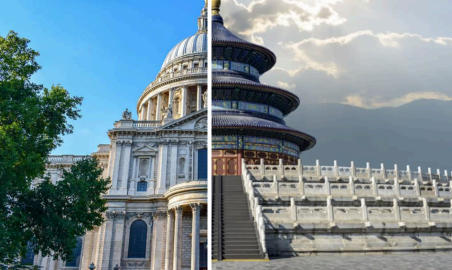
by Katharine Qiu, Grade 8
We often dwell on the contrasts between East and West—the bustling streets of Shanghai versus the quiet villages of the Cotswolds, the grand ceremony of a Chinese banquet against the informal warmth of a British pub. Yet, after years divided between the two countries, I’ve become fascinated not by the glaring differences, but by the subtle, profound similarities in how we build our days. Beneath the surface of language and ritual, the English and Chinese share a foundational blueprint for living well, rooted in three quiet pillars: the sanctity of the hearth, the reverence for green space, and the pursuit of equilibrium.
We must consider the core of what makes a house into a home. Whether it’s a terraced house in Bristol or an apartment in Chengdu, there exists a shared commitment to creating a private sanctuary. The British obsession with “cosiness”—achieved with a well-stuffed sofa, a roaring fire, and a softly glowing lamp—finds its direct parallel in the Chinese ideal of domestic warmth. This untranslatable word evokes a warmth that is both physical and emotional, a sense of safe, familial intimacy. It’s in the carefully chosen teapot, the soft slippers by the door, and the priority placed on making one’s space a refuge from the external world. In both cultures, the home is not just a place to sleep; it is a deeply personal project, a canvas for expressing stability and comfort.
Consider our relationship with nature. The English countryside is globally iconic, but so too is the Chinese classical garden, and both stem from a deep-seated cultural need to integrate green escape into daily life. The weekend pilgrimage to a National Trust park, where families stroll among ancient oaks, mirrors precisely the sight in a Beijing hutong, where residents air their songbirds in bamboo cages under the morning sun, or the evening crowds that gather in any city’s public parks for square dancing or tai chi. The park is like a communal lung. It’s where the rigid structures of work and urban life are softened.
There is also this universal, modern grapple with balance. The famed British “stiff upper lip” and the Chinese ethos of endurance and hard work, often manifested in long office hours, are now confronting the same 21st-century reckoning. The buzzwords “wellness” and “mindfulness” are translated and adopted with equal fervour in Oxford and Hong Kong. The search for a harmonious work-life balance has become a central preoccupation for young professionals. Both cultures, with their historical emphasis on grit and duty, are now learning to publicly value mental health, leisure, and personal time, creating a new, shared language of self-care.
In essence, our lifestyles are converging not through globalisation’s blunt force, but through a recognition of shared human needs. We all seek a warm harbour in which to moor, a patch of green to sustain our spirits, and a sustainable pace for our precious days. To notice this quiet harmony is to realise that the foundations of a good life, whether built with Yorkshire stone or grey Beijing brick, rest upon the same, enduring ground.
