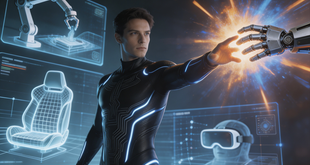
Sarah, grade 9 Previously, we explored the core architecture of haptic technology—spanning sensing, data conversion, and actuation. Today, I would like to introduce its applications. Haptic technology is already utilized in robotics, medicine, and gaming. In robotics, haptic technology effectively improves the stability of grasping objects. For example, through a …
Read More »Same Field, Big Difference: Defining Chinese and Western Medicine
By Sofia Pan, G9 A friend of my mother’s from Germany once shared a remarkable story: after her father was diagnosed with leg paralysis, conventional treatments failed to rehabilitate him until he visited a Chinese medicine doctor, who restored his mobility through acupuncture. Yet, when I suffered a strained leg, …
Read More »The Bug That Outsmarted Science: The Truth About Modern Bed Bugs
By Sofia Pan, Grade 9 In the 1950s, humanity nearly eradicated bed bugs (Cimex lectularius) with heavy-duty chemicals like DDT (dichlorodiphenyltrichloroethane). For decades, they felt like an archaic myth from the nursery rhyme, “Good night, sleep tight, don’t let the bed bugs bite.” But by the 2000s, they launched an …
Read More »Where Do We Come From — The Formation of the Universe
By Sofia Pan, G8 Every culture throughout human history has crafted an origin story to explain how the cosmos came to be—from primordial oceans churning life into existence to divine architects sculpting order out of chaos. Yet modern astrophysics and cosmology have uncovered an even more poetic and mathematically astonishing …
Read More »How the Piano Turns People into Albert Einstein
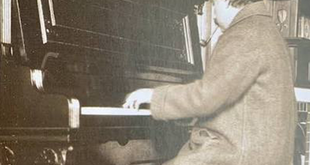
By: Sofia Pan, Grade 9 According to family accounts, whenever Albert Einstein found himself stuck on a complex mathematical or scientific problem, he would abruptly get up from his desk and walk towards the piano. He would play for a short while, and then suddenly, his face would light up. …
Read More »The Battery Everyone Is Waiting For
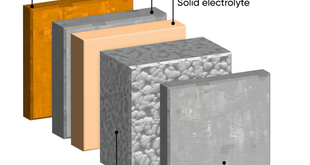
By: Mitchell Cui, Grade 11 Almost every rechargeable device in your life runs on the same basic idea. Lithium ions shuttle back and forth between two electrodes, swimming through a liquid electrolyte in between. That liquid has carried consumer electronics for three decades, and it is also the reason batteries …
Read More »The Quiet Shift From Chatbots to Coworkers
By: Mitchell Cui, Grade 11 For the past few years, most people’s experience of artificial intelligence has been a text box. You type a question, you get an answer, and then you copy that answer somewhere it can actually be useful. That arrangement is changing. The newest systems are designed …
Read More »Allowing Touch to Be Transported
By: Sarah, grade 9 Imagine you are at a park. You call your best friend because you see her favorite British Shorthair. You then touch it and show your friend, and your best friend feels the soft fur and the unique texture instantly. Isn’t that incredible? This is actually called …
Read More »