By: Elle Shi, Grade 7
March Monthly Feature: Because of the ongoing 2026 Milano Cortina Winter Olympics, the Rising Star Sports Column, Game On, is dedicated to writing about the legends, controversies, amazing wins, and unmentioned miracles.
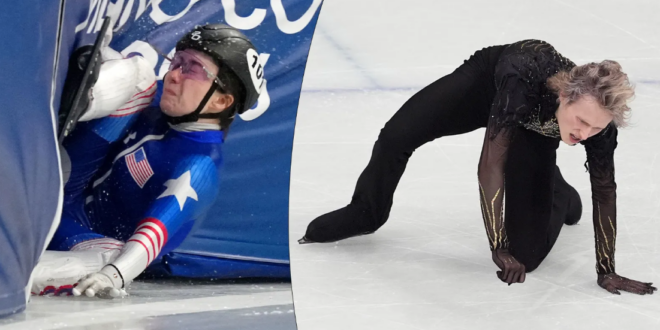
When you watch the Winter Olympics, the ice is always looking perfect, smooth, shiny, and flawless. However, if you ask the athletes skating on it, you’ll hear a very different story. Ice quality has become one of the most common Olympic mistakes, especially during this year’s figure skating and short-track speed skating in Italy.
Ice quality isn’t a brand-new issue. Since the Beijing 2008 Olympics, the use of fully artificial ice has raised some controversies. Some athletes liked its consistency, while others said it felt brittle and unforgiving. Especially in the 2014 Winter Olympics set in Sochi, Russia, skaters complained the ice felt too soft and slow, breaking down as events went on. Then, in 2018, in PyeongChang, Korea, players said the surface changed depending on the time of day, all thanks to temperature and humidity shifts.
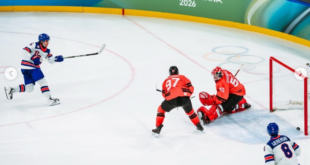
This leads to the question, “Why is it so hard to get right?” This is because “good ice” means different things for different events and skaters. Hockey players want hard ice for speed and sharp cuts, but figure skaters need a surface that absorbs landings without catching blades. Speed skaters want ice so smooth it feels like flying. Trying to make one rink work perfectly for everyone is a living nightmare.
However, that doesn’t make the complaints any less serious. At the Olympic level, tiny details matter. A patch of bad, slippery ice can throw off a jump, slow down a race, or change how a puck moves. When Olympic medals are decided by milliseconds, ice quality stops being a minor detail and starts being a competitive issue for the fate of competitors.
Olympic organizers insist things are getting better. They use advanced cooling systems, constant monitoring, and teams whose only job is maintaining the ice. Maybe they’ve made progress since the first Winter Olympics, but athletes keep noticing differences from rink to rink, which is the main problem. The Olympics are supposed to be about the best of the best in the world, and usually not who adapts fastest to bad ice.
Work Cited;
Rich, Motoko, and Josephine de La Bruyère. “At the Olympics, Drama on the Ice Is Not Limited to the Skaters.” The New York Times, 21 Feb. 2026, www.nytimes.com/2026/02/21/world/europe/olympics-ice-maintenance-zamboni-drama.html