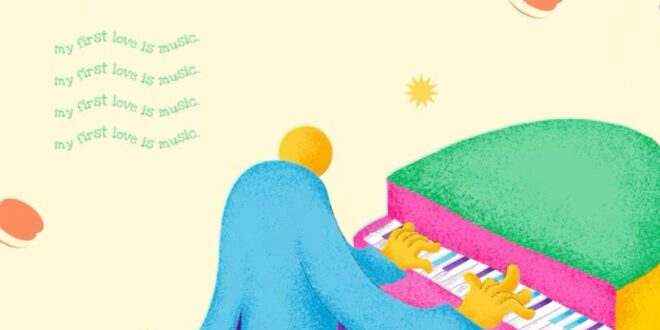
By Elizabeth Tang Grade 6
When the little boy grew up, he went to a music school to study further and tried to use music to convey hope. This boy was Frédéric Chopin, a musician who brought happiness to people. Chopin might not have known about dopamine, but he certainly knew how to touch the human heart through the language of notes.
Music brings us hope. No matter where you live, in war or sunshine, no matter how you feel, angry or happy, music is always your best friend. It gives us new dreams and lets us express our feelings when playing it. Walking with music, you will feel better.
Why do we love music? The sound of a single note may be nothing, but when many notes are arranged neatly together, our brains feel great. Scientists have found that music can trigger the production of a hormone called dopamine. When the music reaches its climax, more dopamine is released, which generates emotions. For example, sentimental music can make us feel sad, and uplifting music makes us want to laugh. As a piano learner myself, I feel at peace whenever I play. But always remember, the same piece of music can evoke different emotions in different people. This stems from the different experiences of people’s lives. Happy music can even evoke sad memories, and this is normal. Music can also activate motor nerves, which is why you sway or dance when listening to music. Music keeps your brain active.
Why can music affect our feelings? Much research shows that music can change our physical conditions, like accelerating our heartbeat or breathing, and even changing our body temperature! This all depends on the music we listen to. Scientists have shown us that when you listen to music, you expect the next melody. If that sound goes the way you want, it creates resonance and makes you feel comfortable because it activates the reward mechanism. Also, music involves the activity of the prefrontal cortex, which controls our bodily sensations. Music is directly linked to our feelings.
Can music help you think? Yes, it can. One study’s conclusion indicates that musicians’ brains are more sensitive to sounds than those of ordinary people. This shows that musicians’ brains have stronger abilities for new neurons to form connections. That is why when scientists like Einstein were thinking, they liked to play music. Even Sherlock Holmes played the violin when he sorted out his thoughts. Also, if you let a baby listen to Mozart, it can train the baby’s brain to become stronger.
Music is magic and powerful because it is the greatest gift bestowed upon humanity by the heavens. It is the only common language in the whole world. So next time you put on your headphones, ask yourself: what magic is happening in your brain?