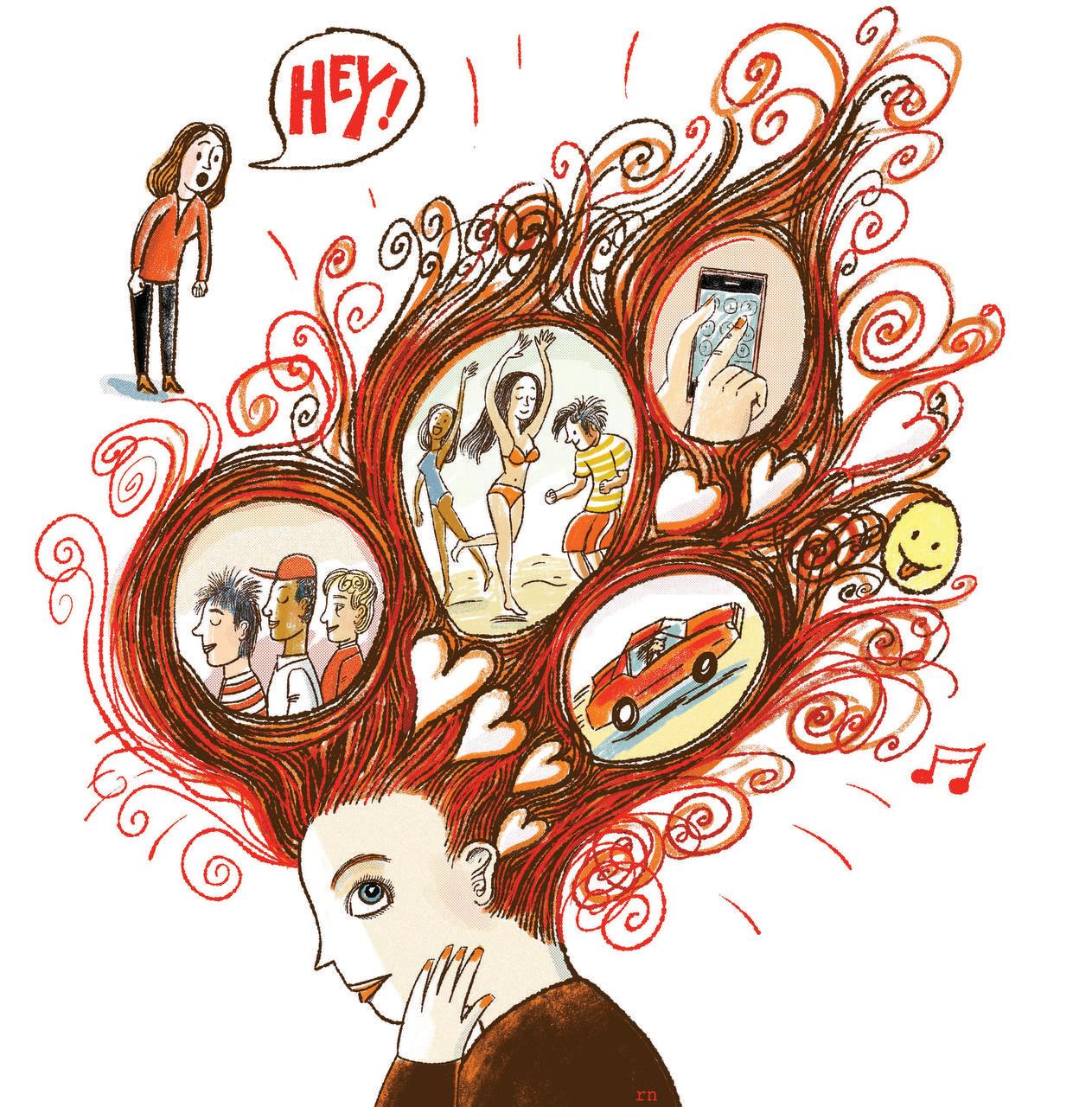
Modern teenagers are often associated with disobedience, taking risks, and making irrational decisions. Though many families can relate to these stereotypes, fewer attempt to analyze the scientific and logical basis for the difference in behavior between teenagers and adults, instead blaming teens for acting illogically. To investigate the causes behind these phenomena, several experts in the field have described the scientific take on the inner workings of teenage brains. Ultimately, the differences between teenage and adult decision making stem from both biological differences and a disparity in life experience–things that should be understood before teenagers are criticized.
Teen brains are fundamentally different from adult brains in their structure and development. Indeed, the amygdala, the area of the brain controlling instinctive reactions, develops the earliest in teens while the prefrontal cortex, the region controlling more complex reasoning, is initially less mature. Due to this biological difference, teens are more strongly spurred to action by emotions rather than reason. As a result, they may make seemingly irrational decisions which appear unreasonable provided the facts, but these same decisions are reasonable when teenagers’ emotions are taken into account. Furthermore, “an area of the teenager’s brain that is fairly well developed early on…is the nucleus accumbens, or the area of the brain that seeks pleasure and reward” (Edmonds 2). Consequently, rewards are overly exaggerated in teen minds and they tend to weigh the benefits of a decision much heavier than they do the consequences.
Besides the biological differences that affect teen decisions, a lack of prior experience prevents them from making the best choices. Dan Romer of the Conversation explains that “a dispassionate review of existing research suggests that what adolescents lack is…the wisdom that