How social media engineered your attention
Have you ever promised yourself to scroll for ‘5’ more minutes, but ended up spending half an hour? If you feel like you can’t control it, you’re right. And it’s not that you’re weak-minded; instead, it’s the sneaky science behind social media platforms that’s manipulating you.
These platforms use sophisticated algorithms to keep you engaged. Think of them as an invisible DJ for your mind. This DJ doesn’t just play songs you know; it constantly predicts what you might like next. How? Through a set of dynamic calculations powered by machine learning. Every click, scroll, share, message, video view, and even how long you hover over a post provides crucial data. And the algorithms analyze this data to predict what you’ll enjoy next and feed you more of it. Conversely, if you stop watching a video after a few seconds or hide a post, the algorithms interpret these as negative signals and show you less of that content. This is why Instagram prioritizes posts from accounts you interact with, and why TikTok’s “For You” page feels eerily personalized.
Though these algorithms do more than curate content, they actively train your brain to crave more by continuously agitating your mood and playing with your instincts. The algorithms learn what makes you angry, scared, excited, or curious, then feed you more of those exact triggers. Also, since your brain is wired to pay attention to new information for survival, social media platforms constantly present “fresh” content to you. Notice there is no “end of the page” on TikTok or Instagram? That’s intentional. These platforms are designed as bottomless wells, exploiting a key facet of human nature: the brain’s circuit for wanting is far more powerful than its circuit for satisfaction.
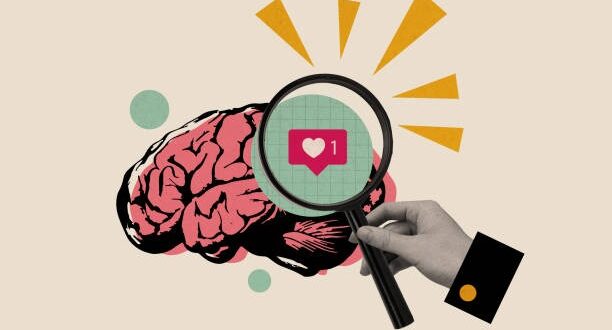
This algorithmic manipulation would be concerning enough if it only affected our time and attention. But research suggests it triggers something far more alarming: these platforms are physically changing your brain structure. A 2023
UNC-Chapel Hill study published in JAMA Pediatrics found that teenagers who checked social media more than 15 times a day showed altered sensitivity in brain regions critical for emotional regulation and decision-making. This points to a startling possibility: our digital habits may be reshaping the very structure of our developing brains, with potential consequences for mental health and cognitive function.
Although neuroplasticity allows your brain to be influenced, it also enables it to heal and adapt. You can reclaim control by understanding the system and using it wisely. For instance, practising self-control is an effective way to prevent social media addiction. This can include setting limits on how much time you spend on social media and being mindful of your behaviour when using these platforms. You should also track your time by downloading apps that can help you monitor and track your time on social media. Another potent way to limit social media usage or prevent addiction to social media is to spend more time with your friends offline. This can involve planning outings or activities that don’t involve social media, such as hiking or playing board games.
Social media is a double-edged sword. It can connect and inform, but it can also distract and manipulate. Understanding the science behind the scroll—its logic and its impacts—is the first step to becoming a wiser user. Remember this: In this battle, you must strive to be the engineer, not the one being engineered.