by Katharine Qiu, Grade 8
They often share the same space—the park bench, the supermarket aisle, the family dinner table—yet they inhabit vastly different universes. On one side, you have the teenager, plugged in, always-on, their world is a rapidly scrolling feed of information and social connection. On the other hand, you have the elderly, for whom the world is often measured in quieter, steadier rhythms, where a face-to-face conversation or a stroll down memory lane holds more weight than a hundred Instagram likes.
But how exactly do the lifestyles of teenagers and the elderly differ in the modern age? It is more than just a generation gap; it is a fundamental difference in the way time, technology, and purpose are perceived.
For a teenager, time feels like a scarce, precious commodity. The school bell dictates the day, homework deadlines loom, and social calendars are packed with events, practices, and hangouts. Life is a sprint towards the next milestone: the weekend, the next grade, getting a driver’s license, or graduating. The future is a vast, exciting, and slightly terrifying horizon, and the present is all about preparing for it. The concept of boredom is often met with immediate digital distraction. For the elderly, time often expands. Retirement lifts the rigid structure of the nine-to-five. While appointments and social clubs provide a framework, the days are often more fluid. Time can be a companion, a space for reflection, or a quiet observer. A morning coffee can last an hour, not five minutes. The past is a rich landscape they revisit often, and while the future is acknowledged, the focus is firmly on savoring the present moment. The urgency of the teenage clock is replaced by a more deliberate, appreciative pace.
This brings us to the defining difference of our era: the relationship with technology. Teenagers are digital natives. Their social lives, entertainment, and even parts of their education exist online. A smartphone is not a device; it is an extension of the self. Communication is instant, visual, and often public. Trends are born and die within a week. Their world is global, connected, and incredibly fast-paced. The elderly are, in many ways, digital immigrants. They learned this new language later in life. While many are now active online or use video calls to connect with family, the relationship is different. Technology is a tool, not an identity. For them, a phone call still carries more emotional weight than a text. News comes from the television or a physical newspaper. Their community is often more local and tangible. The sheer volume and speed of online information can be overwhelming, a stark contrast to the curated streams of a teenager.
The structure of their social lives follows a similar pattern. The teenage social life is often about the tribe. It is about finding your people, navigating complex hierarchies, and the constant hum of social activity. The fear of missing out is a real and powerful force. Friendships can be intense and all-consuming, a testing ground for identity and intimacy. As people age, social circles often, by necessity or choice, become smaller but deeper. Health issues can make getting out more difficult. Friends may move away or pass on. The focus shifts from a wide network to a core group of cherished, long-time friends and family. The hangout becomes a planned coffee date, a weekly card game, or a phone call with a son or daughter in another state. The value is placed not on the quantity of interactions, but on the quality and history behind them.
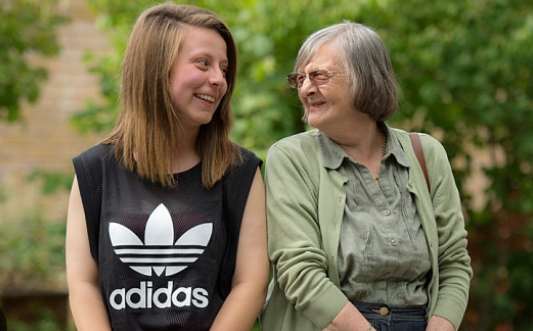
Their relationship with their own bodies also diverges sharply. For a teenager, health is often an afterthought. Bodies are resilient, energy levels are high, and physical limits are tested. Sleep is often sacrificed for socializing or studying, and a diet might consist of whatever is convenient. The body is a vehicle for experience—running, dancing, playing sports. In later life, health moves to the forefront. It is no longer an afterthought but a daily priority. Managing medications, attending doctors’ appointments, and maintaining mobility through gentle exercise become central to the daily routine. A simple ache is not just an ache; it is a signal to be monitored. Sleep becomes more precious, and diet is carefully considered to manage conditions. The focus is on preservation, on maintaining independence and quality of life for as long as possible.
Ultimately, the difference comes down to perspective. A teenager is building a life. Everything is about potential, ambition, and carving a path. There is a sense of invincibility and a burning desire to leave a mark. The big questions are who am I and who will I become? An elderly person has lived a life. They are looking back on the path they carved, with all its triumphs and regrets. There is often a sense of wisdom, acceptance, and a desire to share their stories. There is a profound appreciation for simple joys—a sunny day, the laughter of a great-grandchild, the comfort of a long marriage. The big question becomes whether they lived a good life.
While their lifestyles are a study in contrast, the potential for connection is immense. When a teenager slows down to listen to a grandparent’s story, they are not just hearing about the past; they are gaining a richer perspective on their own future. And when an elderly person engages with a teenager’s digital world, they get a window into the vibrant, chaotic, and exciting landscape of today. They may live in two different worlds, but the best conversations happen on the bridge between them