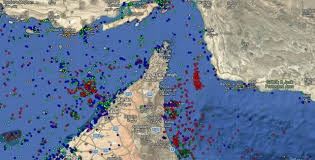
The Strait of Hormuz, a narrow channel between Iran and Oman, has erupted into a major geopolitical and economic flashpoint in early 2026. This waterway isn’t just another shipping lane — it’s one of the most important oil chokepoints on Earth, carrying roughly 20 % of the world’s seaborne crude oil and substantial amounts of liquefied natural gas (LNG) every day. Its disruption has sparked widespread concern over energy supplies, global fuel prices, and international security.
The crisis stems from the ongoing war between the United States, Israel, and Iran that escalated in late February. Joint U.S.–Israeli airstrikes targeted Iranian military sites and leadership, including the killing of Iran’s supreme leader. In retaliation, Iran’s Islamic Revolutionary Guard Corps (IRGC) began warning ships against crossing the strait, and multiple attacks on merchant vessels followed, effectively grinding tanker traffic to a halt.
Iran’s actions have significantly reduced the flow of oil and gas through the strait, causing major producers like Iraq to cut output and storage facilities to fill as tankers avoid the region due to safety risks. Some satellite tracking suggests that Iran itself has continued exporting oil — particularly to China — even as other countries’ shipments are deterred, highlighting how the disruption is uneven but still serious.
The impact has already rippled through global markets. Oil prices briefly surged past $100 per barrel, marking one of the largest supply shocks in decades. Gasoline and fuel costs have risen in many countries, prompting concerns about inflation and higher energy bills for consumers worldwide.
Governments and businesses are responding to the crisis on several fronts. Some European and Asian nations are stockpiling fuel and exploring alternative transport routes. Others are debating military and diplomatic efforts to reopen the waterway; for example, the U.S. has discussed naval escorts for oil tankers, though European allies like Germany and the United Kingdom have been reluctant to involve NATO militarily.
The strait’s closure — even if partial — underscores how dependent the global economy still is on a handful of strategic maritime passages. Disruptions here don’t just affect the Middle East, they reverberate into energy markets across Asia, Europe, and beyond. As tensions persist with no clear end in sight, the world watches closely, aware that what happens in this narrow channel could shape global oil markets for months or even years to come.