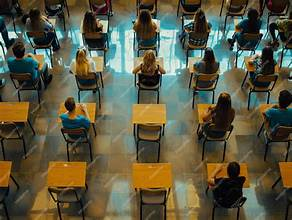
Psychology researchers Zeng and Li (2023) describe mental health as “a broad term that encompasses an individual’s emotional, psychological, and emotional well-being.” In recent years, the topic of mental health, especially among young people, has become more pertinent to society. More than ever, pressure on students is rising. According to Cheah (2020), a researcher for a reputable sports journal, exercise has been sacrificed to make room in students’ schedules to study longer hours to meet the growing academic demands of society. The lack of social connection, as found by the Office of the Surgeon General of the United States (2023) also gives way to rising levels of cognitive disease. The outlined issues raise an important question; To what extent does pressure stemming from academics on high achieving high school students compromise their long term health outcomes?
Pressure stemming from academics has long term consequences that affect the individual on not only their current mental health, physical health, and social life, but also those same factors in the future.
Social Isolation’s Impact on Mental Health
First, mental health is negatively affected by factors that are incentivized by academics, such as social isolation. An example of the Gaokao exam in China is brought up by Yang et al. (2023). Since students’ grades on this one critical exam indirectly determines the majority of their future, “students generally prepare for this exam starting at an early age, and spend nearly all their time studying,” (Yang et al., 2023). From this, researchers concluded that depression among high school students is the highest when the stages of academic pressure are the most intense, especially since many students start isolating themselves from a young age. Because students are expected to receive good grades, many are incentivized to isolate themselves in order to study efficiently, and secure their future. Furthermore, Matthews et al. (2015) studied the relationship between social isolation and early mental health problems, and published his findings in a reputable journal with over 50 citations. From his longitudinal study, Matthews et al. (2015) discovers that “multiple periods of isolation from childhood to adulthood predict poorer adult health outcomes.” Not only does the current state of mental health get affected in students’, but mental health going into adulthood will face negative effects as well. Social isolation’s impact on mental health includes developing symptoms of depression and anxiety. Matthews and colleagues’ research argues that early social isolation’s impact on mental health stretches far into adulthood, impacting high achieving high school students for the rest of their life.
Over-emphasis on grades in particular is a major factor in mental health issues. A college professor, Placier (1995), observes that many students feel the need to negotiate grades given by professors, in order to receive an A average. Considering society’s rushed perspective of the academic journey, many “fifth year seniors graduating…have to have an A” (Placier, 1995). The overwhelming need to conform to social standards of a perfect high achieving student is mentally taxing, which leads to issues with anxiety (Patel, 2023). Outside of pressure from peers during school, many students in India face pressure from parents to study well and receive good grades. “Students of science streams of higher secondary private schools are going through great mental stress because of the highly competitive environment in the school and the expectation and pressure of parents for better academic performance” (Patel, 2023). The extreme emphasis on grades is directly correlated to a higher prevalence of depression and anxiety, and since these mental health issues stay with the individual even as they progress through life, academic stress compromises students’ long term health.
Physical Health Effects from Social Isolation
Additionally, social isolation also has damaging physical effects on the body. The Office of the Surgeon General of the US argues that issues with cardiovascular and other heart related diseases arise. “Poor social relationships were associated with a 29% increase in the risk of heart disease and a 32% increase in the risk of stroke,” meaning that by just isolating themselves for academics, high school students’ physical health is directly affected. In addition, the Office of the Surgeon General of the US supports the claim made by Matthews et al. (2015), that “these effects can begin early in life and stretch over a lifetime.” Specifically, researchers linked cardiovascular disease, hypertension, and weak immune responses to social isolation. In the case of high school students, society’s pressure on them to excel academically leads many to isolate themselves, in turn compromising their physical health. Shankar (2023), published his findings relating isolation and physical health, in a credible journal “Missouri Medicine”. For example, during the COVID-19 pandemic, physical distancing was required to reduce chances of infection. However, particularly in younger people, higher levels of cortisol became more prevalent and body mass indexes (BMI) increased (Shankar, 2023). The BMI scale relates a person’s body weight and height. Shankar reports adverse effects on cardiovascular, immune, and endocrine systems that will have lasting effects on youth as they grow older, stemming from social isolation.
Following the technological innovations during the pandemic, such as the rise in popularity in convenient delivery services, sedentary lifestyles were promoted when people were encouraged to stay home. Due to the social isolation stemming from quarantine, many adopted 5 unhealthy lifestyles, and as a result faced issues with cardiovascular health. While some cardiovascular diseases can be treated, others require long term medical intervention, and affect the person for the rest of their life since many would not be restored back to their prime health (Shankar, 2023). Even in the modern day, the physical issues that arose with mass social isolation years ago still affect the habits of people now, facing increases in BMIs.
Study Time cuts into Recovery Time
Finally, incentivizing students to spend longer studying cuts into the time that should be allocated towards recovery. According to the World Health Organization (WHO), a renowned medical library, the recommended amount of exercise for high school students is at least an hour per day. However, more than 80% of high school adolescents did not meet the current regulations (WHO, 2019). Exercise is vital to preserving the physical health of any age throughout life, and the “first ever global trends for adolescent insufficient physical activity show that urgent action is needed to increase physical activity levels in girls and boys” (WHO, 2019). The WHO reports that exercise plays a major role in regulating weight and cardiometabolic health, and thus lack of exercise in adolescents is alarming since many physical benefits of exercise are sacrificed, in order to keep up with academic pressure. High school students also lose the benefit of confidence without exercise and social contact, since physical activity improves body image and lessens eating disorders (Zeng & Li, 2023). Therefore, when students sacrifice more time studying, the positive effects of necessary physical activity are lost. Additionally, adolescents are affected in the long run, since many are losing the time to develop health lifestyle habits. Students spend less time recovering and sleeping. A study conducted by Tanaka et al. (2002) that studied the relationship of sleep quality and long term health was published in the reputable journal of 6 “Psychiatry and Clinical Neurosciences” Tanaka and colleagues’ experiment concluded that the group with better sleep health tended to perform better academically. In fact, Tanaka claims that “sleep quality at the high school stage in life is not a problem pertinent to only educators; it is vital importance to life long health management,” demonstrating how though the recovery issue with teenagers may not seem significant, since students are somewhat expected to sleep less to study more, solving the issue early positively affects current high school students for the rest of their life. Patel (2023) further emphasizes the importance of sleep, by reporting that “a significant proportion of students facing problems with classmates and teachers, parents’ pressure to study and fulfill expectations, and sleep distribution were found to be significantly more depressed.” Ironically, not obtaining the recommended amount of hours of sleep “may suppress brain function and diminish the ability to learn, concentrate or control the mind” (Tanaka et al, 2002). So, we can conclude that dismissing the importance of proper sleep and recovery has adverse effects on mental performance, and together, Tanaka et al. (2002) and Patel (2023) emphasize that long term health is affected when recovery is sacrificed in the name of academics.
Long Term Health or Studying
Academic pressure placed on high school students negatively influenced their long term health. The issue grows with future generations, since if the academic trend promoting social isolation continues, people in current high school generations will have physical and mental health issues that last into adulthood. Students must weigh if it is worth sacrificing the health they will have for the rest of their life. High achieving high school students should be encouraged to prioritize their long term health.
References
Cheah H. F. (2024). Using Shanghai municipal data to examine whether student sacrifice exercise in response to academic pressure. Heliyon, 10(13), e33527. https://doi.org/10.1016/j.heliyon.2024.e33527
Matthews, T., Danese, A., Wertz, J., Ambler, A., Kelly, M., Diver, A., Caspi, A., Moffitt, T. E., & Arseneault, L. (2015). Social isolation and mental health at primary and secondary school entry: a longitudinal cohort study. Journal of the American Academy of Child and Adolescent Psychiatry, 54(3), 225–232. https://doi.org/10.1016/j.jaac.2014.12.008
Office of the Surgeon General (OSG). (2023). Our epidemic of loneliness and isolation: the U.S. Surgeon General’s advisory on the healing effects of social connection and community. US Department of Health and Human Services. https://www.hhs.gov/sites/default/files/surgeon-general-social-connection-advisory.pdf
Patel, U., Chauhan, D., Patel, M., Rahul, K., & Yadav, V. (2023). Determinants of depression among higher secondary students of private schools of science stream in an urban area of western India. Indian Journal of Community Medicine, 48(2), 334–339. https://doi.org/10.4103/ijcm.ijcm_374_22
Placier, M. (1995). “But I have to have an a”: probing the cultural meanings and ethical dilemmas of grades in teacher education. Teacher Education Quarterly, 22(3), 45–62. http://www.jstor.org/stable/23475833
Shankar, R. (2023). Loneliness, social isolation, and its effects on physical and mental health. Missouri medicine, 120(2), 106–108. https://pmc.ncbi.nlm.nih.gov/articles/PMC10121112/
Tanaka, H., Taira, K., Arakawa, M., Masuda, A., Yamamoto, Y., Komoda, Y., Kadegaru, H., & Shirakawa, S. (2002). An examination of sleep health, lifestyle 10 and mental health in junior high school students. Psychiatry & Clinical Neurosciences, 56(3), 235–236. https://doi.org/10.1046/j.1440-1819.2002.00997.x
World Health Organization. (2019). New WHO-led study says majority of adolescents worldwide are not sufficiently physically active. https://www.who.int/news/item/22-11-2019-new-who-led-study-says-majority-of-adolesc ents-worldwide-are-not-sufficiently-physically-active-putting-their-current-and-future-he alth-at-risk
Yang, W., Sun, R., Wang, C., Chen, J., Zhang, C., Yu, J., & Liu, H. (2023). Epidemiology of depressive disorders among youth during Gaokao to college in China: Results from Hunan Normal University mental health survey. BMC Psychiatry, 23(1), 1–18. https://doi.org/10.1186/s12888-023-04972-w
Zeng, S., & Li, L,. (2022). Analysis and countermeasures of related factors between mental health and physical exercise of Law College Students. Journal of Sport Psychology / Revista de Psicología Del Deporte, 31(1), 17–25. https://research.ebsco.com/linkprocessor/plink?id=7c93e1fe-e08f-3e59-9228-f6a6a7bb5cfa