Picture this: every single day, the equivalent of 2,000 garbage trucks full of plastic gets dumped into the world’s oceans, rivers, and lakes. Not every week. Not every month. Every. Single. Day.
Every year, 19 to 23 million tonnes of plastic waste leak into rivers, lakes, and seas around the world. That’s not just a number; the International Union for Conservation of Nature estimates it equals the weight of five blue whales entering our environment every hour.
So where does all this plastic go? A lot of it sinks. Plastic pollution can be found everywhere in the ocean, from shallow coastal waters all the way down to the deepest parts of the sea. And it doesn’t disappear. A plastic bottle can take up to 450 years to break down. Instead of going away, plastic slowly breaks into tinier and tinier pieces called microplastics, pieces so small you can’t even see them with your eyes.
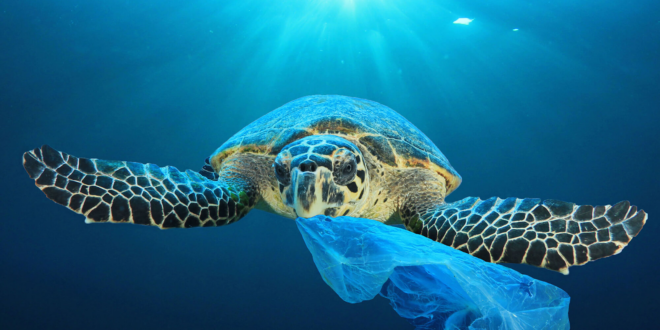
Here’s where it gets personal. More than one million seabirds and 100,000 marine animals die from plastic pollution every year, and 100% of baby sea turtles have been found to have plastic in their stomachs. Marine animals like turtles and whales often mistake plastic bags for food. Blue whales, the largest animals on Earth, are estimated to swallow around 10 million pieces of plastic per day while feeding.
But it doesn’t stop with animals. It comes back to us, too. Those tiny microplastics travel up the food chain, from small fish, to bigger fish, to our dinner plates. Scientists have already found microplastics in human blood. The ocean feeds about 3 billion people worldwide, and the more plastic we put in, the more we end up eating ourselves.
The good news? People are fighting back. As of 2024, ocean cleanup efforts have already removed 10 million kilograms of litter from oceans and rivers around the world. Countries are also passing new laws to reduce single-use plastics, and communities along coastlines are working to stop plastic from reaching the water in the first place.
The ocean produces more than half of the oxygen we breathe. It keeps our climate stable and feeds billions of people. But right now, it needs our help. The plastic crisis didn’t happen overnight — and it won’t be fixed overnight either. But every plastic bottle you choose not to use is one less piece heading toward the sea.