President Trump signaled Tuesday that diplomatic negotiations over the ongoing war in Iran could pick back up within days, offering a rare note of optimism after weekend talks in Islamabad fell apart and the United States responded by imposing a naval blockade on Iranian ports.
Speaking to the New York Post, Trump urged the American delegation to remain in Pakistan, suggesting that a breakthrough could come within 48 hours. UN Secretary General António Guterres echoed that sentiment, calling it “highly probable” that talks would resume. Gulf, Pakistani, and Iranian officials confirmed that negotiating teams from both Washington and Tehran could return to Islamabad later this week, though no date has been set.
The renewed hope was enough to calm jittery oil markets, pushing benchmark crude prices back below $100 a barrel.
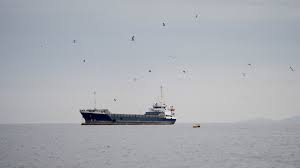
On the ground — and at sea — the situation remains tense. More than a dozen U.S. warships carrying some 10,000 military personnel are now enforcing the blockade, turning away ships bound for or departing from Iranian ports. U.S. Central Command reported that six merchant vessels complied with orders to reverse course in the blockade’s first 24 hours. However, ship-tracking data analyzed by BBC Verify showed that at least four Iran-linked vessels crossed the Strait of Hormuz anyway, along with three other ships unconnected to Iran.
The blockade targets two of Tehran’s biggest revenue streams: oil exports and the tolls Iran has been collecting from ships transiting the Strait of Hormuz — a critical global chokepoint that Iran effectively shut down after U.S. and Israeli airstrikes hit the country on February 28th.
The collapse of the Islamabad talks came down largely to Iran’s nuclear program. The U.S. proposed a 20-year suspension of all uranium enrichment, while Iran reportedly countered with a five-year halt — a gap too wide to bridge over the weekend.
The economic stakes are enormous. The International Monetary Fund has warned that the conflict risks tipping the global economy into recession. U.S. Treasury Secretary Scott Bessent acknowledged the pain but told the BBC that short-term economic hardship was worth the long-term security gains. China pushed back sharply, calling the blockade “dangerous and irresponsible” and warning it could undermine the fragile two-week ceasefire set to expire next week.
On a separate but related front, Israel and Lebanon held their first direct talks since 1993 on Tuesday, meeting at the U.S. State Department in Washington. The session, focused on Israeli strikes targeting the Iran-backed militant group Hezbollah in Lebanon, was described as “productive” by the Lebanese ambassador and as opening a path to a “new era of peace” by his Israeli counterpart. U.S. officials were careful to note that those talks are independent of the U.S.-Iran negotiations in Islamabad.