By: Angeli Fetizanan – 10th grade
As a society of young adults, we consistently prove that money and happiness go hand in hand. In recent years, spending has increased, yet happiness in life has remained relatively the same. Relentless pursuit of wealth has hindered people’s appreciation for the journey that is life. John Stuart Mill, in his book Utilitarianism, famously claimed that those who constantly pursue wealth in hopes of finding happiness at the end of the tunnel hardly ever derive the level of satisfaction they’ve worked so hard for (Mill, 1863). This sentiment ultimately begs the question: to what extent does spending impact happiness?
How Emotions Affect the Brain
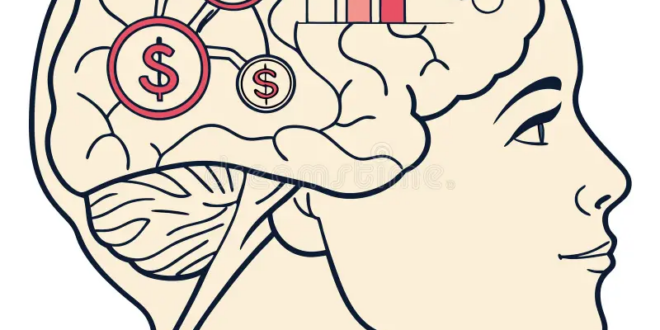
Shopping, like any other hobby, brings great joy to people. The joy people derive from shopping is due to its tendency to give people the ability to shift a small pathway of their life. Shopping offers complete control of decisions to people, providing seemingly endless choices of goods and material items in various colors and shapes. Researcher Dr. Albers at the Cleveland Clinic concluded that our brain releases chemicals that directly evoke happiness, such as dopamine, serotonin, and endorphins. These hormones can be released as early as driving on the way to the shopping mall (Cleveland Clinic, 2024). The release of those signals goes directly to the brain’s reward center, which is its way of encouraging us to continue doing actions it deems essential to our survival. The reward center can also be activated by the anticipation for a package to arrive. For some, just the thought of the possibilities of shopping can release hormones (Cleveland Clinic, 2024). Oftentimes, spending even increases whenever someone is initially in a positive mood. Dr. Flight, a professor of marketing at the University of Eastern Illinois, discovered that impulsive buying behavior can stem from shopping or making purchases while in a good mood. He describes impulsive buying as the “degree to which an individual is likely to make unintended, immediate [or spontaneous], and unreflective purchases,” (Flight & Rountree et al., 2012). His research argues that external triggers such as holidays, special occasions, or any celebratory event can stimulate one’s natural impulsive behavior that signals to the brain to buy material goods. In comparison, compulsive buying tendencies are often repetitive and problematic, in response to negative sensations and events. Interestingly, both impulsive and compulsive behaviors can exist concurrently with each other within the same individual, even if the triggers linked to each are different (Flight & Rountree et al., 2012). Trends and influencers can also elicit emotions from consumers through carefully crafted marketing strategies. Biologically, people have the tendency to observe the behavior and reactions of others before imitating the actions for similar results (Ulic et al., 2025). Recently, researchers concluded that social media trends positively influence consumer behavior, encouraging more impulsive purchases to be made (Ulic et al., 2025). Specifically, targeted advertisements on popular social media platform “Instagram” triggers immediate purchases, pushing consumers away from utilitarian consumption and towards sensational consumption. These platforms offer the necessary tools for anyone to watch the likely positive behavior of influencers towards a product, and affect their hedonic buying choices. The promise of a new product allows for the visualization of fantasies and positive anticipation for the item to arrive. A large factor of marketing is getting consumers to visualize how much better their life would be if they had this product. The consumer’s mind creates a whole world of positive outcomes, leading to positive emotions, leading to impulsive buying (Cleveland Clinic, 2024). Impulsive buying behavior is further promoted by the rise of efficient online retailers and stores, making it more efficient than ever to buy an item you weren’t planning on buying. A study conducted by Rick & Pereira et al. (2014) tested the most effective way for someone to feel as though they’ve gained control over their choices. One group judged the utility of a predetermined catalog with items priced at $25, and another group was able to choose which items they wanted and put them into a hypothetical shopping cart. Participants in the study reported feeling more autonomy when they were able to choose what items they wanted, because of the control of choice they experienced (Rick & Pereira et al., 2014).
Experiences and Long-Term Well-Being
According to British Columbia Psychology Professor Elizabeth Dunn and her colleagues, money spent on experiences can offer more happiness than material items (Dunn & Gilbert et al., 2011). From a health perspective, happiness is closely tied to brain chemistry. Positive emotions are associated with the release of neurotransmitters such as dopamine and serotonin, which influence mood regulation, motivation, and overall mental stability. Retail therapy, described as “the act of shopping with the goal of improving your mood” by the Cleveland Clinic, can decrease residual sadness and increase short-term happiness. When people shop in moderation, this activity can create a temporary but measurable boost in dopamine levels, contributing to improved mood and reduced stress. Materialistic spending and experiential spending are vastly different, however Researcher Elizabeth Dunn and colleagues suggest that people are happier when money is spent on experiences (Dunn & Gilbert et al., 2011). Studies conducted by their team used a sample of one thousand Americans who were instructed to think of one material purchase and one experiential purchase with the intention of making them happier. When asked, 57% of participants found greater happiness in experiential purchases (Dunn & Gilbert et al., 2011). Dunn also claims that experiences are better than material items because of the biological way humans were conditioned. After a noticeable change in what would be a regular environment is detected regularly, the brain often ignores said stimulus, similar to how the brain forgets smells. One example of this is purchasing new flooring for a house. The experience of going from furniture store to furniture store looking for the perfect wood grain is far more enjoyable than looking at the new floor in the house (Dunn 2011). Eventually, the beautiful wood grain fades into nothing more than ground supporting your feet. Experiential spending, however, does not necessarily mean something that the consumer can specifically do. In some cases, it means spending money on others to enjoy their reaction. Francis Flynn, a decorated professor of behavior at the University of California, Berkeley, brings up an example of what psychologists call “prosocial behavior”, which advocates for people to donate and make sacrifices for the good of others. Flynn claims that “investing in others can make individuals feel healthier and wealthier, even if it means making yourself a little poorer to reap these benefits” (Flynn, 2013). Harvard professor and researcher Sade Stenlund suggests that the percentage of people willing to use money prosocially may also be attracted to the idea of garnering social approval from giving to others (Stenlund, 2024). Specifically, MRI scans have shown that the reward center of the brain located in the ventral striatum, activates more when charitable donations are observed by other people. Flynn reports that countries with equal income distribution, progressive taxation, and a general culture of giving were more content than countries without those features. Investing and deriving joy from others may be a factor of human nature, thus giving to others may increase not only their happiness, but our own well-being (Flynn, 2013). This, however, implies that those who spent money on other people already had basic needs covered, and considered the money given for the experiment as extra, suggesting that the money was put into the “unnecessary category” of spending for these people. This sentiment is further supported by an analogy by Dr. Dwight Lee, who had received a PhD in economics. Lee introduces a dispute between a small fisherman and a Harvard economics graduate. The graduate suggests that the fisherman quit his fulfilled life of fishing for just enough utility and spend time with his family, and start fishing longer hours to make more money. Lee claims that “the person who spends his life pursuing money does little to improve his happiness” (Lee, 2006). His claim is agreed upon by John Stuart Mill (1863), who insists that those who focus their entire life on obtaining wealth for themselves, with no consideration to others, will hardly ever derive the happiness they expect to get (Mill, 1863). “Wealthier countries experience less infant mortality, danger, and longer life expectancies.” (Mill, 1863) These are all experiences that benefit citizens, not material items.
Oftentimes, authors fail to observe members from the lower class. The exclusion of this economic class is because it is very difficult to collect material spending data on this particular group, since most are likely to spend money on necessities only and not materialistic indulgences. Geoffery Paulin, a senior economist with multiple papers published, claims that it is important to include this group because those of a lower economic status may spend differently from middle or even upper class (Paulin, 2008).
Health Risks of Overconsumption
While moderate spending can stimulate positive brain chemicals, compulsive shopping presents risks. Persistent urges to shop in response to stress can lead to behavioral addiction patterns. Overspending may increase anxiety, guilt, and financial stress, which elevate cortisol levels. Chronically high cortisol can negatively impact sleep, immune function, and even memory formation. For young adults, especially, using shopping as the primary coping mechanism for stress may interfere with the development of healthier emotional regulation strategies.
Humans are biologically wired to learn from observing others. When people see the negative mental health consequences of shopping addictions, such as stress and emotional instability, they may become more cautious about their own consumption habits. Awareness of these patterns supports healthier decision-making and protects long-term brain health.
Conclusion
Shopping can improve the well-being of people by releasing positive hormones into the brain and recalling wistful memories. Material spending, however, is not as fulfilling as experiential spending. Spending money is enjoyable to young adults as long as purchases are regulated. One must consider that if everyone is fulfilled with their quality of life, people would have no drive to try to improve their lives. It is necessary for the evolution of mankind to want to pursue more happiness, whether through more experiential spending or simply finding other ways to derive it, lest progress cease to exist (Lee, 2006).