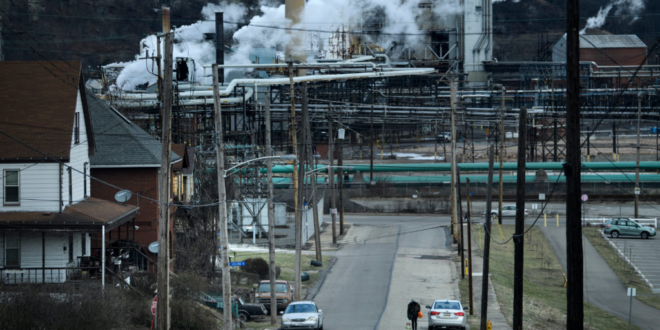
Take a deep breath. Now imagine that the air around you smells like diesel trucks, factory smoke, or chemicals every single day. For millions of people across the United States, that’s part of their normal life.
Clean air isn’t something everyone gets equally. Where you live and how much money your family has plays a role in the air you breathe. People of color are 1.5 times more likely to live in an area with poor air quality than white people. That’s not a coincidence. It’s the result of years of decisions about where to build highways, factories, and power plants.
Historically, highways and polluting facilities have been placed next to low-income neighborhoods and communities of color, and the negative health effects have been felt most by the people who live there. This happens partly because decision makers know these communities are less likely to push back, and because low-income areas offer cheaper land and easier access to transportation for industries.
The health effects are serious. Communities of color in the U.S. experience 7.5 times higher pediatric asthma rates compared to mostly white communities. Children living near busy roads can actually develop asthma, and develop it from breathing in traffic pollution over time.
One of the most striking examples is in Louisiana. Along an 85-mile stretch of the Mississippi River between New Orleans and Baton Rouge, about 200 fossil fuel and chemical plants sit alongside local communities in an area known as “Cancer Alley.” People living there face the highest cancer risk from industrial air pollution anywhere in the United States, more than seven times the national average.
Low-income individuals suffer physical and mental health consequences from overexposure to air pollution, including impaired brain function. And when people get sick more often, they miss work and school more, which makes it even harder to escape poverty. It becomes a cycle.
The good news? Change is possible. Cities like Detroit and Syracuse are already using federal funding to remove old highways that cut through communities of color, replacing them with street-level roads that reduce pollution and reconnect neighborhoods.
Clean air should not be a privilege for people in wealthier zip codes. It’s a basic right, and until the systems that created this inequality are changed, millions of people will keep paying for it with their health.
Sources: American Lung Association, NRDC, GWU Milken Institute, Johns Hopkins Bloomberg School of Public Health, Urban Institute.