By Dillon Zhang – 11th grade
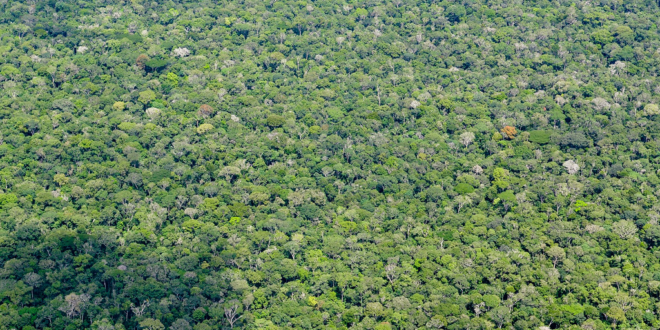
Deep in the Congo, an elder stands at the edge of a forest his family has cared for for generations. The trees are tall and full of life. He does not have legal papers to prove the land is his. What he has is knowledge passed down from his ancestors and a strong connection to the forest. He says, “We are not protecting the forest. We are the forest.”
Scenes like this are becoming less common. In 2024, the world lost 6.7 million hectares of old-growth tropical rainforest. It equals about 18 football fields of forest disappearing every minute of every day. This is the worst loss in more than 20 years.
Old-growth forests are not just big groups of trees. They have grown naturally for hundreds or even thousands of years without being cut down. These forests store huge amounts of carbon, which helps fight climate change. They are also home to more than 80% of land animals and plants. Many of these species cannot survive anywhere else.
The hard truth is that once an old forest is destroyed, it cannot truly be replaced. Planting new trees does not bring back what took thousands of years to grow.
In 2024, fires became the main cause of forest loss for the first time. Hot temperatures, drought, and human mistakes caused many of these fires. Brazil was responsible for 42% of global forest loss. Bolivia lost twice as much forest as the year before. Due to the fires, the Congo also had its worst year on record.
Fires are not the only problem. Forests are also cut down for cattle farms, soy farms, and illegal logging. Weak governments and demand from wealthy countries make the problem worse. Even if the cutting happens in one country, the products are often sold around the world.
However, there is still hope. In Bolivia, Indigenous communities created fire alert systems and trained local firefighters. They made rules to stop fires from spreading, and it worked for two years in a row. In the Congo Basin, local people are protecting over 154,000 hectares of forest. They have stopped illegal logging and helped wildlife return.
These communities are not waiting for others to save the forests. They are protecting their homes and their way of life.
Protecting the forests we still have is one of the fastest and cheapest ways to fight climate change and protect wildlife. But even though 140 countries promised to end deforestation by 2030, many have made little progress.
Making promises is easy. Protecting forests is harder.
These forests are not just someone else’s problem. They are being destroyed right now. But they are also being defended right now by people who understand something important: when we lose the forest, we lose a part of ourselves.
Sources: Global Forest Watch (2025), Rainforest Foundation UK, World Resources Institute, Strong Roots Congo