By: Mitchell Cui Grade 11
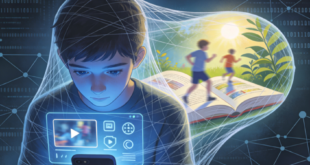
The “Dead Internet Theory” used to be a weird joke from a late-night Reddit thread. It used to be just a conspiracy theory of bots talking to other bots. But when you look at the internet in 2026, it doesn’t feel like a joke anymore. It feels like a place where artificial voices are starting to overpower real ones.
If you look at social media, it’s like a city of mannequins. Everything is a little too perfect, and the captions are a little too catchy. One reason for this is the rise of AI-generated content. It’s now possible for people to write essays, captions, images, and videos in mere seconds. As a result, the internet is filling up faster than ever before. But not with the same kind of effort. Scroll through long enough, and you’ll see patterns beginning to emerge. Different accounts will start to sound the same. The way people phrase things and arrange their sentences and words will repeat over and over and over again.
But the way people make their content is also changing. Rather than having imperfect and messy posts, people are now turning to artificial intelligence.
Typos disappear. Awkward phrasing gets corrected. Ideas are generated instead of struggling through. The rough edges that once proved a real person was behind the screen are fading away. Those imperfections used to be what made the internet feel alive.
When content becomes effortless, it stops meaning as much. If a machine can produce something polished in seconds, posting no longer feels like an act of expression. It feels like adding to a pile. AI does not just increase the amount of content. It changes its value. The more flawless everything becomes, the harder it is to tell whether anyone actually cared enough to make it.
This is why people are starting to pull back into what some call Human Groves. These include small-group chats, private Discord servers, and voice calls. They are spaces where people are more willing to be unfiltered. Someone might trip over their words or laugh at the wrong time. Those moments matter now because they are harder to fake. They feel real.
The goal is not to find better content. It is finding proof of life. AI can imitate style, structure, and even personality, but it struggles to recreate small human inconsistencies like the pauses, the mistakes, and the randomness have become signals of authenticity.
The funny part is that the better AI gets at copying people, the more everyone craves the real thing. The internet is no longer just about information. It is about knowing that someone spent time and energy to share something genuine. In a space increasingly shaped by machines, staying human is becoming the rarest and most valuable thing of all.