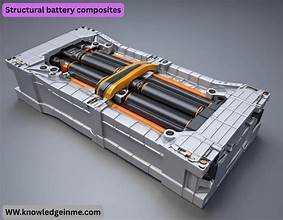
If you’ve ever lugged a laptop around in your backpack all day, you know the battery is always the heaviest thing in there. It’s literally like carrying around a giant, heavy brick, and it’s just sitting inside the plastic casing. That’s exactly what electric cars and airplanes are like right now. They’re forced to carry around huge battery packs that weigh hundreds or even thousands of pounds. These batteries are just dead weight because they don’t help hold the car together or make it stronger. It’s a huge problem because the heavier a car is, the more energy it takes to move it. However, as we move further into 2026, a very cool new technology is emerging to change the rules of car design. Instead of putting a battery in a car, engineers are working to figure out how to make the car out of the battery.
They make a material called carbon fiber, the same material used to make expensive tennis rackets and professional racing bikes. The difference in this new material is that the carbon fibers do two jobs at once. The fibers act as the car’s frame, making it sturdy, but also act as a battery to store electricity. A special kind of resin goes in between the fibers to make this electricity flow throughout the material. This means that a car door or a plane wing is not just a piece of metal anymore. Instead, it is a giant, thin battery. Because this battery is also part of the car’s structure, it doesn’t add any extra weight. This is called massless energy storage, a total game-changer in energy storage technology, since it means the car is much lighter and can go much farther on a single battery. This is not just some crazy idea from a movie. This is something that actual scientists are working on right now in a lab. For example, Professor Leif Asp at Chalmers University of Technology recently conducted a study showing that they could make this kind of battery material that is just as stiff as aluminum. There is also a large-scale research project called SORCERER in which scientists at Imperial College London are working with various corporations, such as Airbus, to make plane wings into energy storage materials. This research shows that using the wings in this way will make electric planes light enough to fly long distances without exhausting their energy.
Of course, it’s not all good; there are a few kinks to work out, like what would happen if you get into a minor car accident. What if your car door is also your battery, and a small dent is a much larger problem than it is now? We also have to work out a solution for making this material more affordable, as carbon fiber is not exactly cheap. We also have safety experts who are writing the rules for testing this material so it is safe for everyone to use. Despite all of this, the progress that is being made in 2026 is pretty incredible. We are moving into a future where not only do we have gadgets that can hold power, but our technology will actually be the power.